
Months in Repose: interpreting the Japanese ‘kyureki‘ year
This past year, we have launched monthly newsletters touching on lesser known aspects of Japanese culture. For 2025, we chose the archaic Japanese names for the months of the year, and spent some time exploring not just the etymology of the kanji combinations used, but the broader themes that each month explored as well as some traditions that take place within.
For new subscribers, as well as those who may be interested, I’ve decided to compile them all in a little blog post. I hope you take some enjoyment from having a little browse through!
January: 睦月 - Mutsu (closeness, harmony) Tsuki (month)
2025- It’s a fresh start for some, and for many, a time to reflect on the year passed. Today we’ll be talking about the Japanese word Mutsuki and its connection to the all important first month of the year.
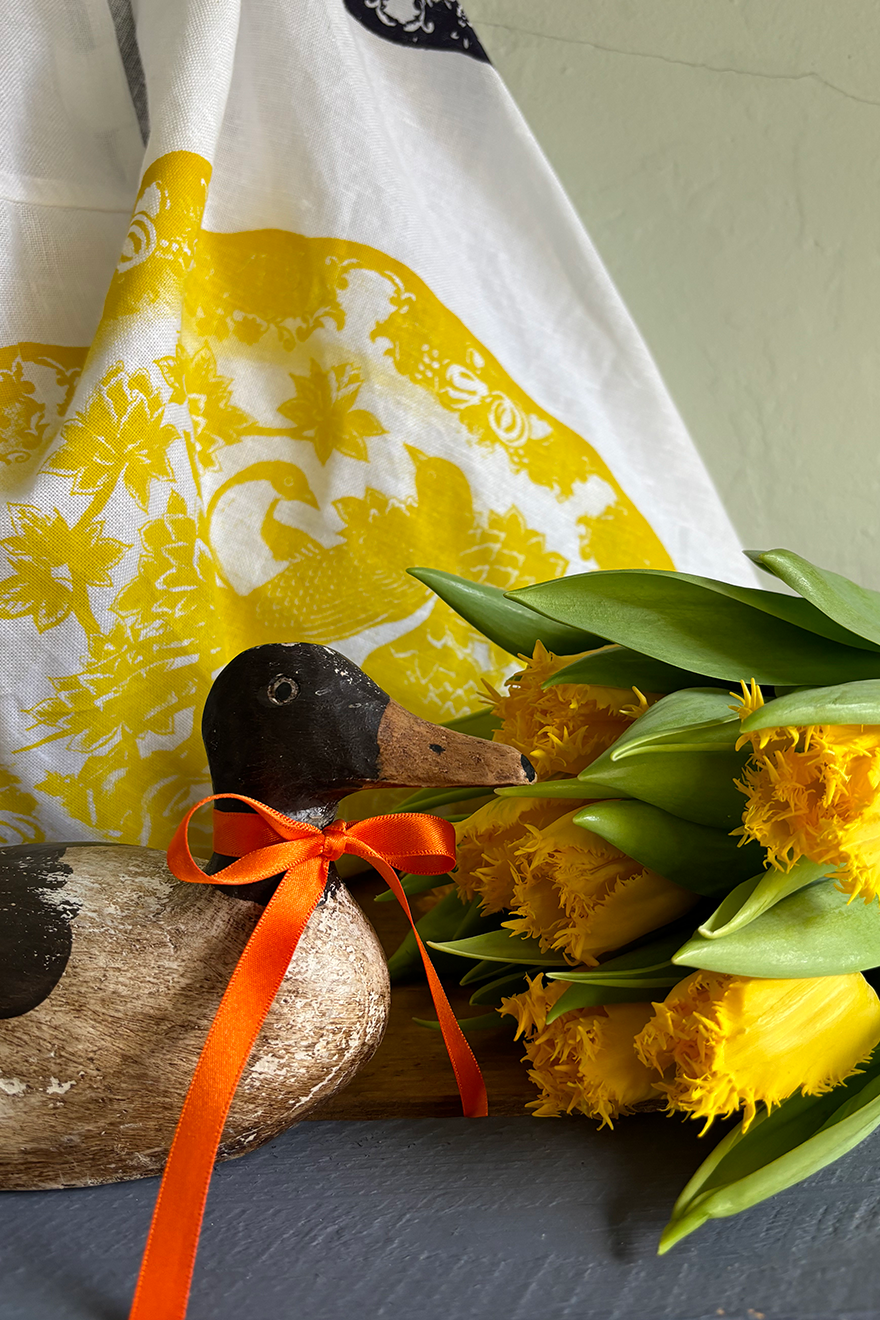
An archaic name for January (now known as ‘Ichigatsu‘) in Japan, ‘Mutsuki’ is a wonderful term that evokes the warmth of appreciating the company of friends, family and loved ones.
The Japanese word ‘mutsubu’ (to live harmoniously) is said to be the origin of Mutsuki, in that the New Year was a special time when people gathered together to . It strongly reflects the custom of families and relatives gathering during the New Year period to celebrate and foster warm, close relationships.
Although this term has not been used since the Meiji period when Japan opened the country to the West, we think it still has its place in the modern day.
Note from Kimika: January brings with it many traditions and formalities in Japan, which I delved into deeper at the start of 2026. You can find that at the bottom of this blog post, so read on for more…!
February: 衣更着 - Kisaraki - Ki (clothing) Sara (multiple, more) Ki (forthcoming)
January has finally drawn to a close, and as we head into the transitionary month of February, we take time to appreciate the small joys in life. Today we’ll be exploring Kisaragi, the month of multitudes.

The next archaic form of February (now known as ‘Niigatsu‘) in Japan is certainly one that contains many layers (pardon the pun!). The coldest, and also shortest, month of the year not only is a transitional period into Spring, but a month where care must be taken to properly prepare for the coming year. The ‘kisara’ kanji is fairly literal in this one! The reasoning lies behind the need to look after your body and still wear many layers of clothing so as not to be blindsided by the chilly temperatures in the enthusiasm for the forthcoming promise of warmer temperatures.
We’d like to encourage you all to look after yourselves and make sure you wrap up warm as you admire the slow shoots of nature begin to reveal themselves as the year progresses.
March: Yayoi- 弥生- Iya (Increasingly) Oi (Sprouting buds of trees)
As the weather becomes warmer and the shoots of spring begin to show, we take a minute to think about all the beauty the upcoming months have in store for us. Come with us as we briefly explore the concept of Yayoi, the month of new beginnings.
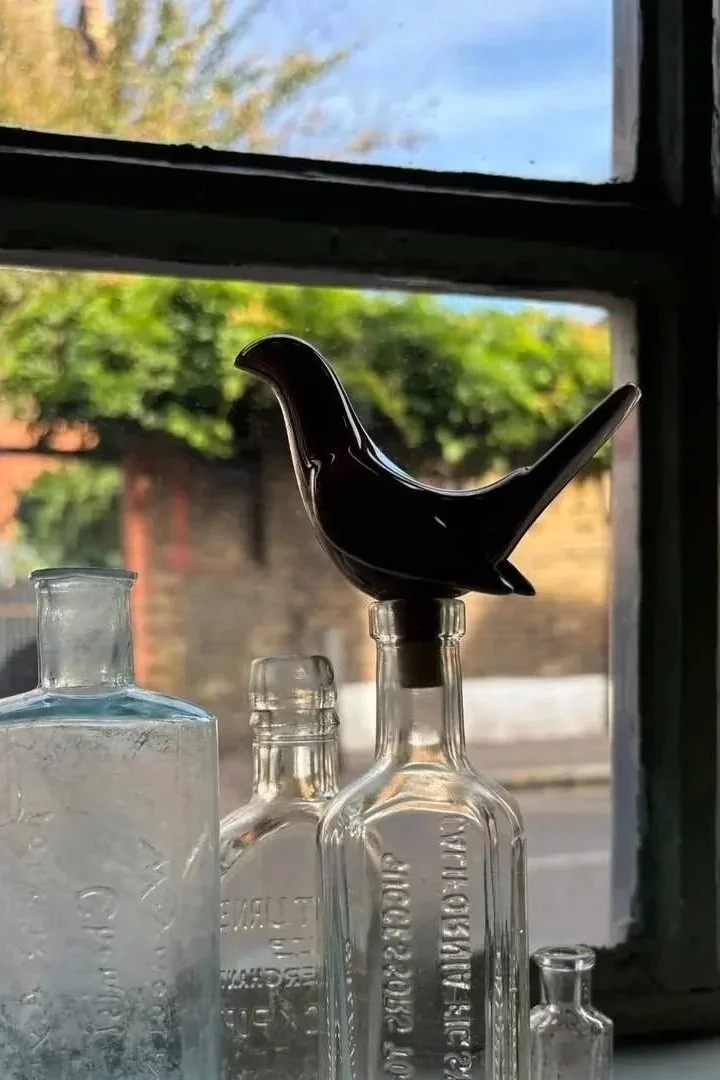
This anachronistic name for March (now known as ‘Sangatsu’ in Japan) comes from the phrase ‘iya oishigeru’, meaning ‘when plants grow beautifully’. Whilst cherry blossom season is the seasonal signifier that most people are aware of, the budding sprouts of the willow trees coming back to life after a dormant winter is the real indicator that spring is on its way!
This word serves as an important reminder to begin to enjoy your surroundings and embrace the developing joy and hope that the unveiling year will bring. Here in Britain, I think we can all agree that the bitter cold of February has been bid a very happy farewell- we can finally begin to see the sun for longer and shed our winter apparel as spring begins to spread its wings!
April: Utsuki - 卯月- Uu (a species of hydrangea/ gen: flowers) Tsuki (Month)
As we feel the days begin to lengthen and the warmth finally surround us after the long month of March (now known as ‘Shigatsu‘), we joyfully step into the blooming and sweet smelling garden of Uzuki, the month of flowers.
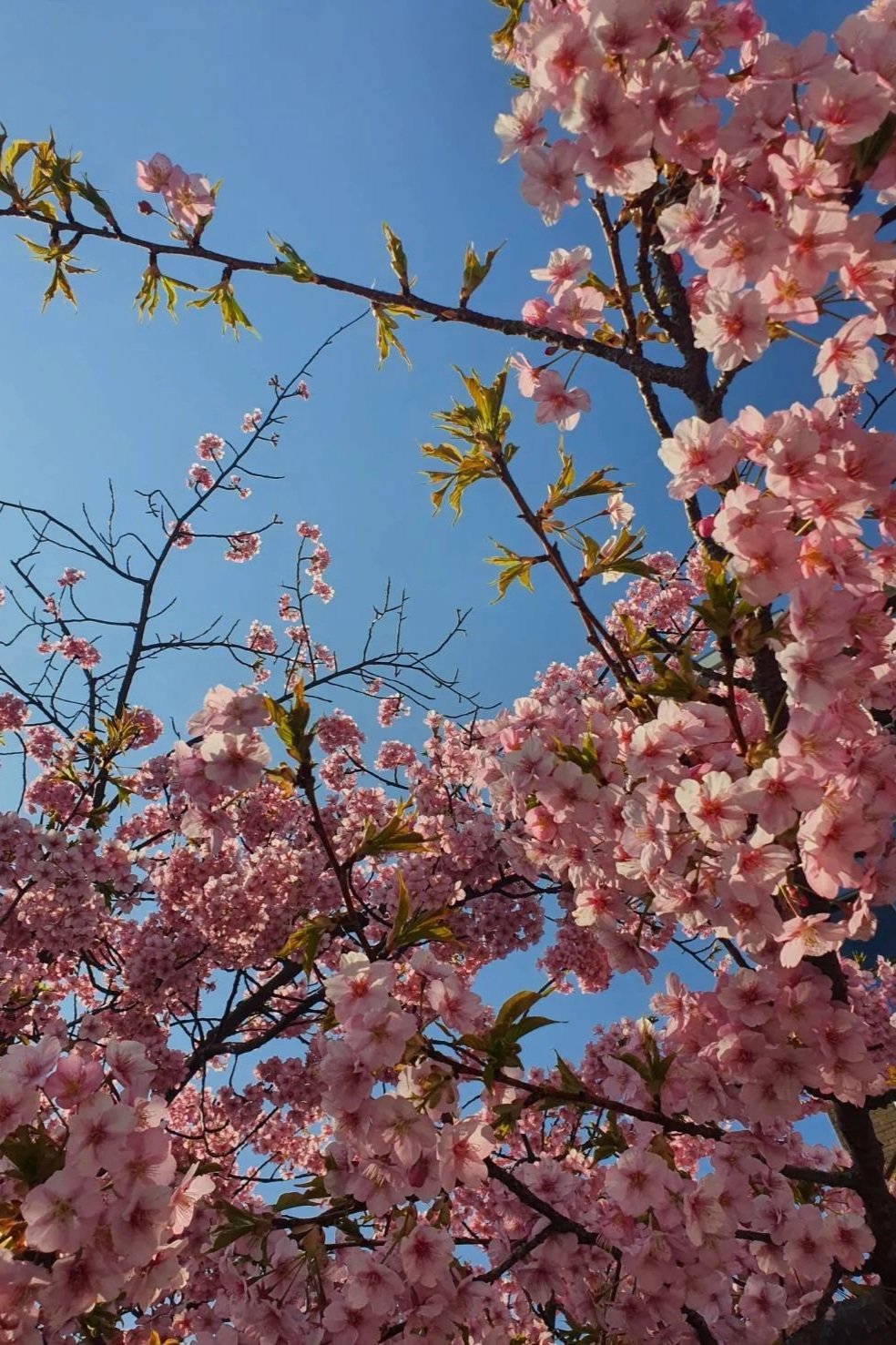
This was certainly an interesting anachronism to research, as apparently the origins of the kanji have been much disputed over the years! Whilst the most direct translation of it is as stated above, with reference to the 卯の花 (‘Uu-no-hana’) flowers that bloom from the trees signifying the beginning of what we now know as ‘Cherry Blossom Season’ in Japan, there have also been other interpretations of it. Apparently, the true origins of the name have been lost to time, but my favourite one is ‘生まれる’ (‘Umareru‘), meaning ‘to come to life‘.
The combination of floral imagery and the promise of new life certainly conjures up images of spring lambs and fluttering cherry blossom petals in the wind, doesn’t it? For those of us ‘blessed’ with hayfever and seasonal allergies, however, it also reminds us to keep well stocked up on eyedrops and tissues!
Traditionally, in Japan, Spring is the month of new beginnings. It certainly fills us with promise as we see the sun rising earlier and the skies getting bluer. We hope that you’ll all manage to take a moment during the busy month of April to take a walk and appreciate the blossoms, wherever you are.
May: Satsuki- 皐月 - Sa (perhaps also taken fron ‘Sanae’, to sow rice; ‘Sa’ meaning a blessing or an offering of rice to the gods) Tsuki (Month)
As the rainy season gently subsides, the cherry blossom petals are softly washed away by the warm summer breeze. May (now known as ‘Gogatsu‘) brings with it the joy of sunshine under which we sow the seeds for Autumn’s harvest with Satsuki, the month of anticipation.
Satsuki, or Sanaetsuki, is a month steeped in the tradition of preparation for the year to come. The ‘sa’ character in this month can be read in a few different ways, but generally speaking it signifies the preparation of the fields for planting rice for the upcoming season. The fresh, newly sprouted green of the fields, nourished by the rainy days of April, brings us a bit of happiness as we head into summer. It also relates to planting tea leaves- a busy month for farmers!
We can interpret this tradition of sowing seeds as a means of working towards the rest of the year with a renewed enthusiasm as we shake off the clouds of winter and early spring under the bright sunshine of May. Not too hot, and not too cold (hopefully…!), May really is the ideal season to start both little projects and grand designs as the year to come starts to reveal itself.
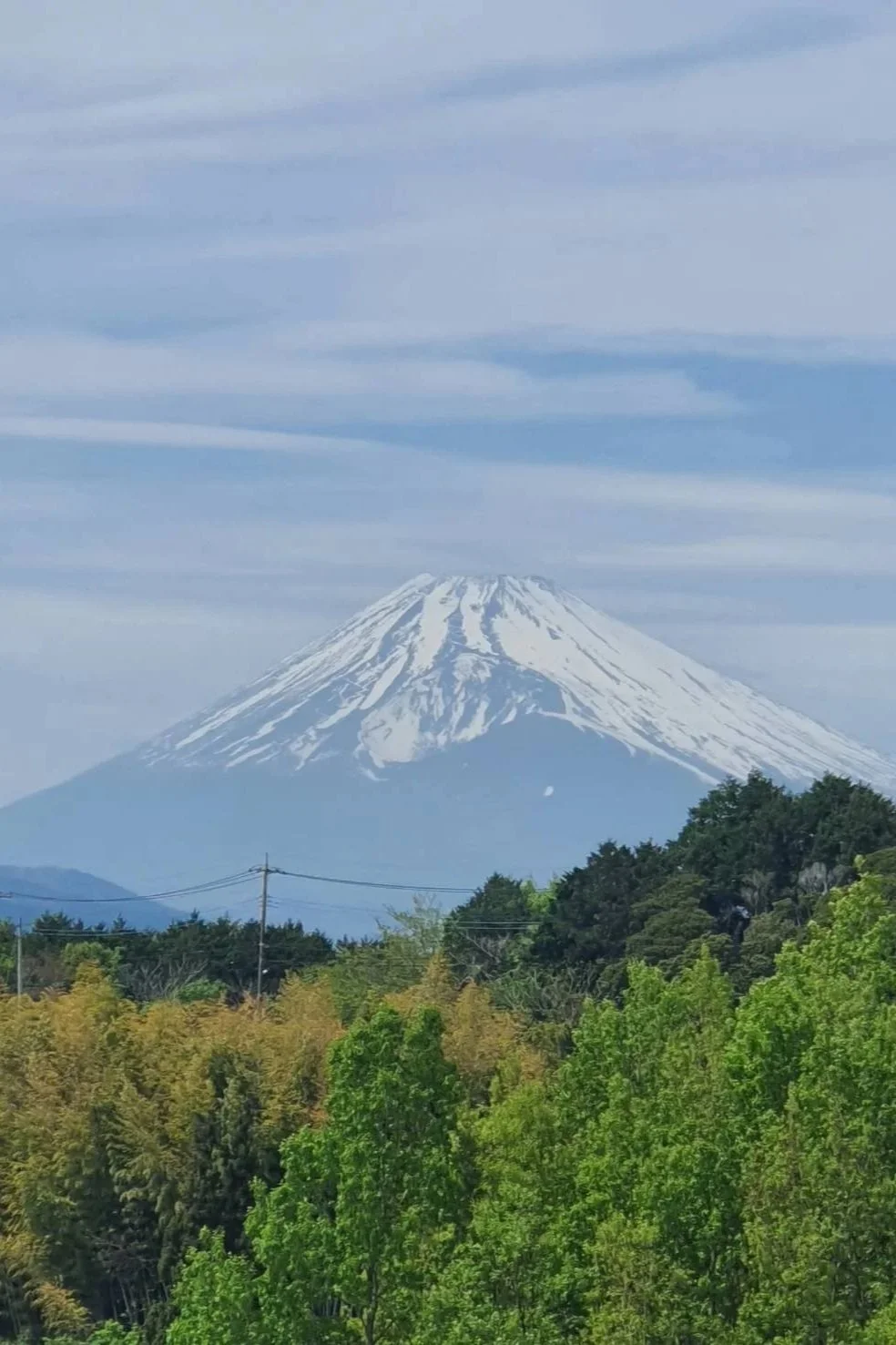
We hope you enjoy the above picture of Mt Fuji, framed by the lush green of Mishima’s forests and farmlands. What an absolute joy to be able to see this beautiful mountain with our own eyes!
June: 水無月 - Minazuki - Water (水 ‘Omizu’, with 無 ‘na’ acting as a particle) Tsuki (Month)
As the sunshine bursts through the storm clouds, and the warmer weather envelopes us in comfort, we celebrate Minazuki, the month of appreciating the essential gift of water.
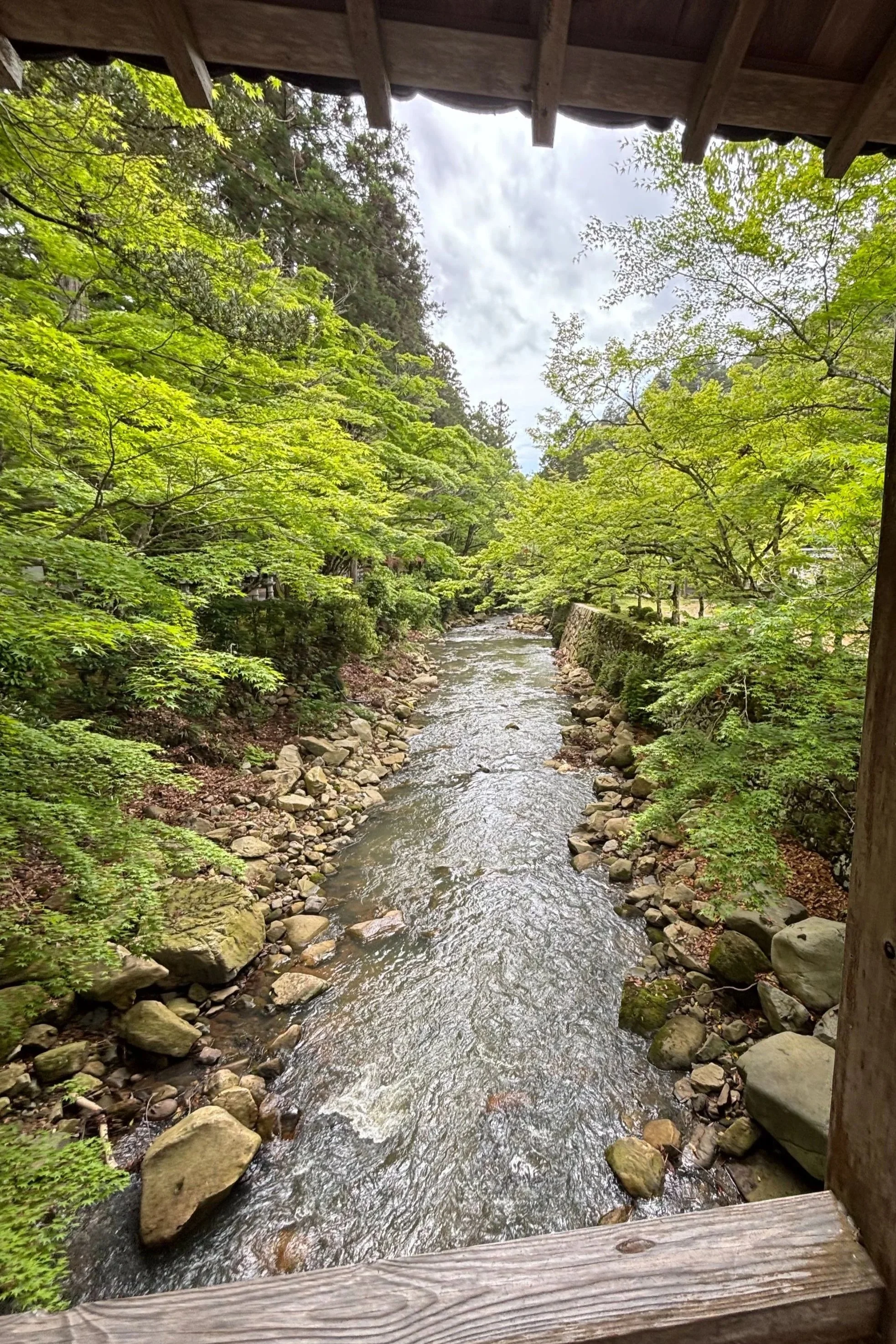
For those of us living in Britain, the start of June (now known as ‘Rokugatsu‘) signifies the beginning of beautiful sunshine and breezy picnics in the park under creamy white clouds and bright blue skies. Quite conversely, in Japan, June signals the start of the months long rainy season (梅雨, or ‘Tsuyu’) that proves crucial to the growth of crops that nourish us for the rest of the year.
As you are sure to be aware, rice is a very valuable crop in Japan, with over 90% of the population consuming the grain for at least one meal per day. So, despite the rain perhaps being oppressive and constant during the day, it is something to be valued, given its important contribution to the flat farmlands that lie in wait throughout the Japanese countryside.
Of course, there is a silver lining to every grey cloud that will soon cover the skies of Japan. Just as early spring brings forth the heady arrival of sakura blossoms, June sees the rebirth of the hydrangea bushes that are often planted in the grounds of shrines and temples throughout the country. The dense, warm raindrops cascading like jewels off of the muted pink and purple petals of this bursting bloom can be quite spectacular, and a real respite when viewed against the heavy storm clouds of the rainy season.
July: Fumizuki- 文 Fumi (Book/ letter, broadly symbolising writing, learning, culture) 月 Tsuki (Month)
Under the blazing sun and dreamy blue skies of summer, let’s take a moment to rest in the shade with our thoughts- July (now known as ‘Shichigatsu‘) brings the concept of Fumizuki to us, a month dedicated as much to relaxation as it is to self betterment.

Fumizuki is a really fascinating alternative name to explore. Whilst the kanji 文 historically means ‘book’, it symbolises the practice of betterment through erudition and knowledge, most likely stemming from a tradition held during Tanabata festivals. In these ceremonies, people would open their books and expose them to the night sky, hoping to enhance writing skill and knowledge. It also served a more practical purpose- July in Japan is one of the wettest months, and airing out your books would dispel the growth of mold and dust on your all important tomes.
Now conversely to the above, others argue that the name stems from another reading of the kanji- ‘Hofumizuki’ is another way of interpretation, and refers to the month being crucial to the growth of rice- in a way changing the meaning from intellectual to agricultural betterment. Historically, Tanabata ceremonies included a prayer of protection of rice crops from storms to ensure for good harvest later in Autumn; it makes sense that this would also be symbolically reflected in the month’s name. Fascinating stuff!
In modern day Japan, Tanabata is a festival celebrated on the 7th of July. People will visit shrines and write their wishes on slips of paper and tie them to bundles of bamboo grass. These bundles are then burned in order to send wishes to the gods. It also celebrates the story of star crossed lovers Orihime and Hikoboshi, who cross the milky way to reunite once a year on this date. It also marks the start of natsuyasume, or as it’s known in English, those all important summer holidays!
August: Hazuki - 葉 (Ha ‘leaves’, shortened possibly from ‘ha-ochi’; falling leaves)月 Tsuki (Month)
As the summer lingers on, we find ourselves in the all important month of August (now known as ‘Hachigatsu‘), which brings with it not only heavy skies and endless heat- it also calls forward a time for reflection and repose. Today we explore Hazuki; the month of transitions and moving time.
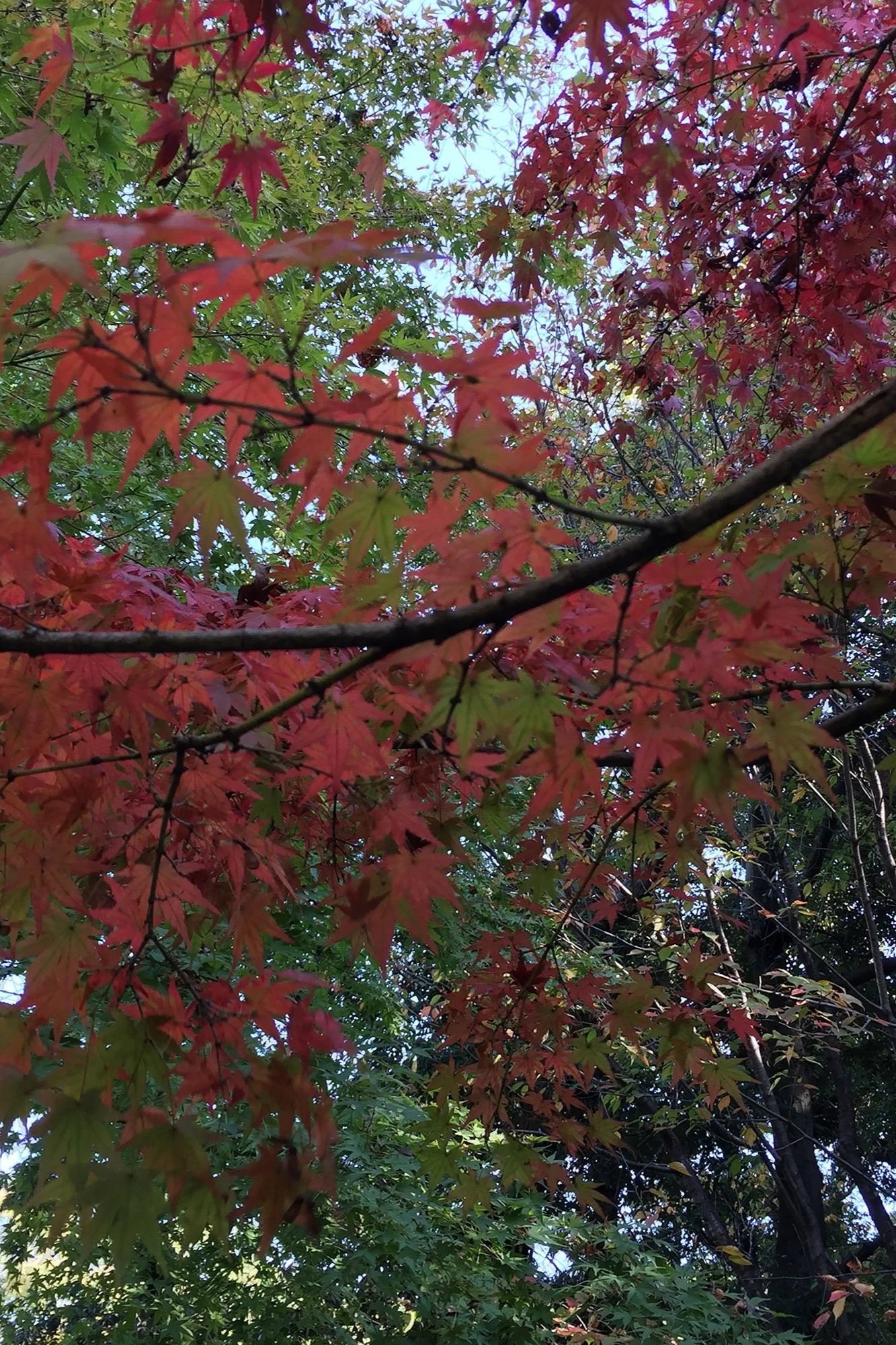
With its heavy skies and endless heat, and the holiday season in full sprint, we usually think of August being the peak of summer. However, as we find ourselves stepping over more fallen branches and avoiding puddles on the way home during an ever earlier encroaching dusk, we may also think of summer winding down and making way for the latter half of the year. It is said to be the time when the first leaves begin to drift from the trees, as if they are testing the waters as to whether or not to begin their own journey into Autumn.
This transitional period highlights the beauty of the in-between. Obon (お盆) is an annual Buddhist event for commemorating one's ancestors, whose spirits are believed to temporarily return to this world in order to visit their relatives. In celebration of those who have passed, dances (bon odori) are performed at summer festivals as a way for the spirits who are visiting to celebrate with loved ones, and food offerings are made at house altars to satiate them before their journey back.
Reflective of this, we hope that your August is not only filled with the anticipation of the beautiful orange and golden spiced Autumn foliage, but with fond memories of a joyful summer spent with loved ones, new and old. Here’s to the next phase of the year!
September: Nagazuki - 長 (‘Naga’ meaning ‘long’; shortened from 夜長 ‘yonaga’, or ‘long night’) 月 Tsuki (Month)
With blustery skies and intermittent sun shining after rainy afternoons, and many of us back to reality at work and school, we refocus our thoughts on the joys of the burgeoning autumnal nights. Come with us as we think about Nagatsuki, the month of evening reverie.

The lengthening of nights as winter draws closer in September (now known as ‘Kugatsu‘) is reflected closely in the season, with the strong heat quickly fading into a memory as the cool evenings draw ever closer. In Japan, it’s a time to feel the tranquility and calm that night can bring after a hectic day. In the past, it was often reflected by admiring the sound of insects in the air and the beauty of the moon at dusk.
Reading was also a popular activity in the autumn, reflected in the interesting concept of 読書の秋 (Dokushou-no-aki, literally ‘the autumn of reading’) that has been gaining popularity in more recent times. As it goes, the autumnal months have been proven to provide the ideal environment for people to focus on reading and self betterment, with the humidity lowering and temperatures settling to a more tolerable level- perfect for concentration and comfort.
For many of us, the thought of summer ending can fill us with dread- gone will be the evenings relaxing in the sunny pub gardens after work, and to come will be umbrellas blown inside out as we try to escape the sudden downpour of rain on our commute home! But it isn’t all doom and gloom- the chill starting to settle in after hours can also mean bringing our favourite coats and boots out of storage and spending cosy evenings in with loved ones, or perhaps doing as the Japanese do and catching up on your reading list.
October: Kanazuki - 神無 (‘Kanna’- ‘Ka' as in ‘kami’; ‘god’, ‘na’ as in ‘nashi’; ‘without’) 月 Tsuki (Month)
As the October (now known as ‘Juugatsu‘) chill begins to descend on us all, it’s time to begin wrapping up and enjoying the seasonal delights that this month brings. Today we explore Kannazuki, the month of harvest celebration.
‘The month without gods’ may sound quite negative at first glance! However, the reasoning behind the name is quite a complex one. In Japanese folklore, the gods congregate once a year to discuss human life and what they can do to help us prosper in the upcoming year. Because of this big event, the gods depart their homes all over Japan and gather in Izumo prefecture- so naturally, this leads to the month being without their presence in various places around the country. However, in quite a contrary manner, the region of Izumo calls this month ‘Kamiarizuki’; the month WITH gods!
Izumo is known as the place where the chief gods of Japan reside. They oversee not only the prosperity of humans and their relationships, but the wellbeing of the years harvest. Around Japan, celebratory ‘omatsuri’ (festivals) are held to convey respect and thanks to the gods and nature for providing us with sustenance for the years both past and upcoming. The all important rice harvest also takes place during this time; and with delicious autumnal offerings like chestnuts, apples, persimmons and mushrooms alongside this staple grain, there is certainly no shortage of food to give thanks for!
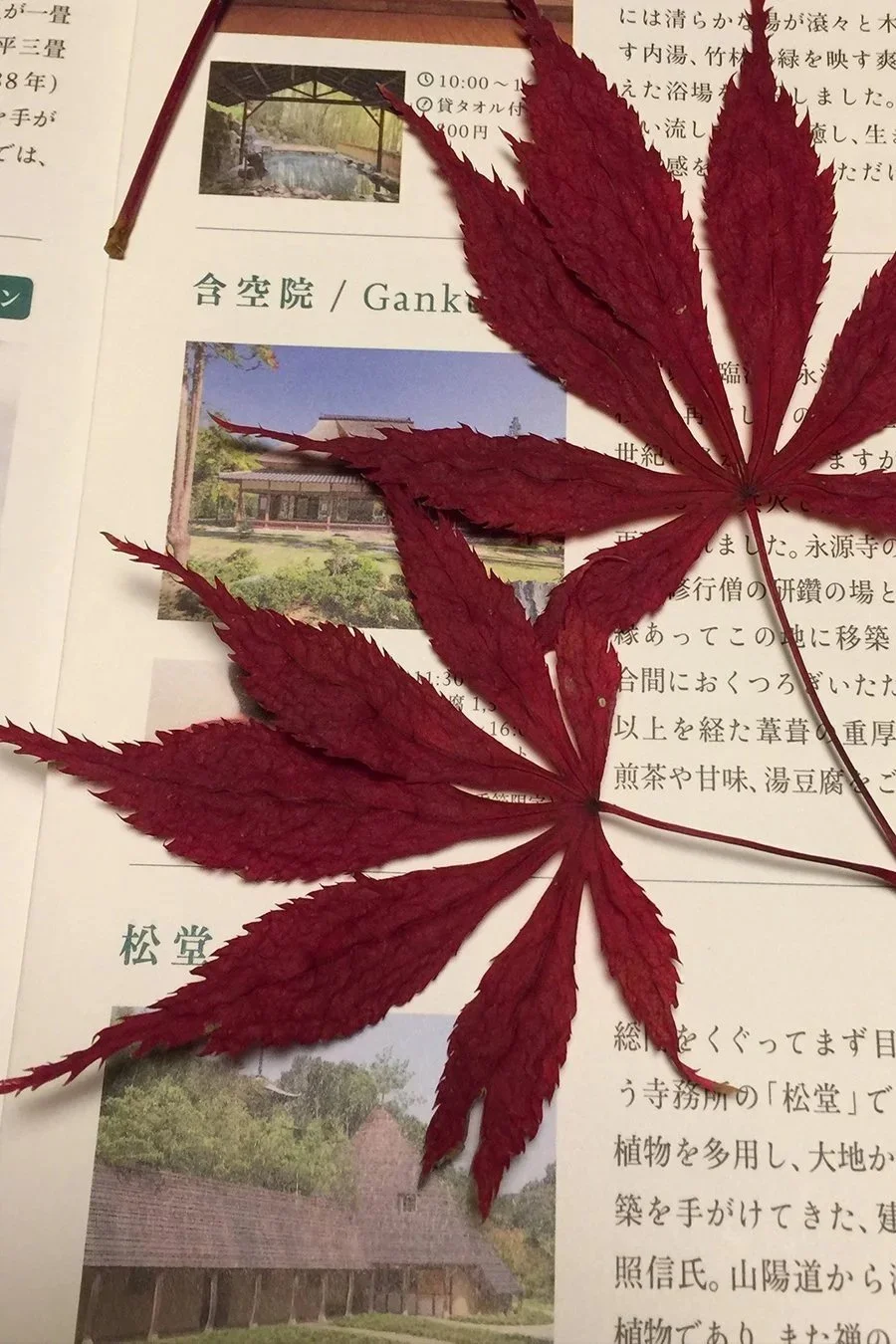
October also brings with it the beauty of the seasonal shift- in Japan, much like the sweeping of cherry blossoms from one end of Japan to the other, the bright burnished red leaves of autumn can be experienced flowing from one end of Japan to the other. Known as ‘momiji-gari’ (leaf hunting), it’s similar to the ‘hana-mi’ (flower viewing) of spring. Momiji is the name for the maple leaf synonymous with Japan’s aesthetic heritage- as they flutter to the ground under a crisp and clear sky, we can certainly feel that the spirit of the season is upon us.
Similarly, as we tread more familiar ground in the UK and elsewhere, the beauty of autumn’s foliage can be admired as we head into the latter half of the year. Although the trees may grow bare, and brisk chilly mornings become the norm, we can’t help but feel charmed by the subtle energy that October holds innate within itself. Whether it’s pumpkin patches with your loved ones or conker hunting in the park, we hope you will have a wonderful time.
November: Shimotsuki - 霜 (‘Shimo’, meaning frost) 月 Tsuki (Month)
With autumn well and truly underway, and the colder months settling in, we search for some small joys and solace in the chilly yet enriching climes of Shimotsuki.

With quite a literal name, you may think that this month would be a fairly dour one- after all, the idea of frost setting in doesn’t exactly bode well for those of us who are dreading the winter’s approach! However, this month can also be seen as one that highlights the beauty of the seasonal shift in more ways than one.
November (now known as ‘Juuichigatsu‘) seems to be more of an anticipatory month, slightly lost to the excitement of December joys, and yet still very important in terms of the year shifting into its conclusion. Many Japanese people take this time to enjoy the final beauty of the falling leaves as the branches begin to become bare, with momijigari (leaf viewing) in full swing as the reddening leaves end their sweep across the country. In the tea ceremony world, the summer furo (a more modest portable water heating pot) is carefully stored away and the true ro (a charcoal lit hearth situated within the tatami room itself) is utilised to warm both guests and servers alike during service.
Some of you may remember from a previous newsletter where we said that the autumnal months provided the ideal environment for cultural enrichment activities; take for example Bunka no Hi (Culture Day), which honors the arts, academic endeavours and sciences, with many schools and clubs around the country holding events, and special art exhibitions opening for the week. It also lends a great setting for outdoor activities as the rain and oppressive heat give way to cooler (and drier!) days.
Here in Britain, the clocks have gone back 1 hour, and with them we have lost a precious hour of daylight. But it’s not all doom and gloom! With Guy Fawkes’ night leaving in its wake a heady scent of bonfire, and the beautiful red and gold leaves creating a sort of imperfect picnic blanket sprawled across our paths, we hope you will take a moment to take in the beauty of your environment (perhaps in the company of a certain spiced gourd flavoured latte…) and enjoy the last vestiges of Autumn as we veer ever nearer to December’s frosty beckoning.
December: Shiwasu - 師 Shi (teachers and religious mentors; in this case, ‘monk’) 走 Wasu (‘running’)
It’s December (now known as ‘Juunigatsu‘)- that all important time of the year- and we bring with it the fitting concept of Shiwasu, the month of running priests.
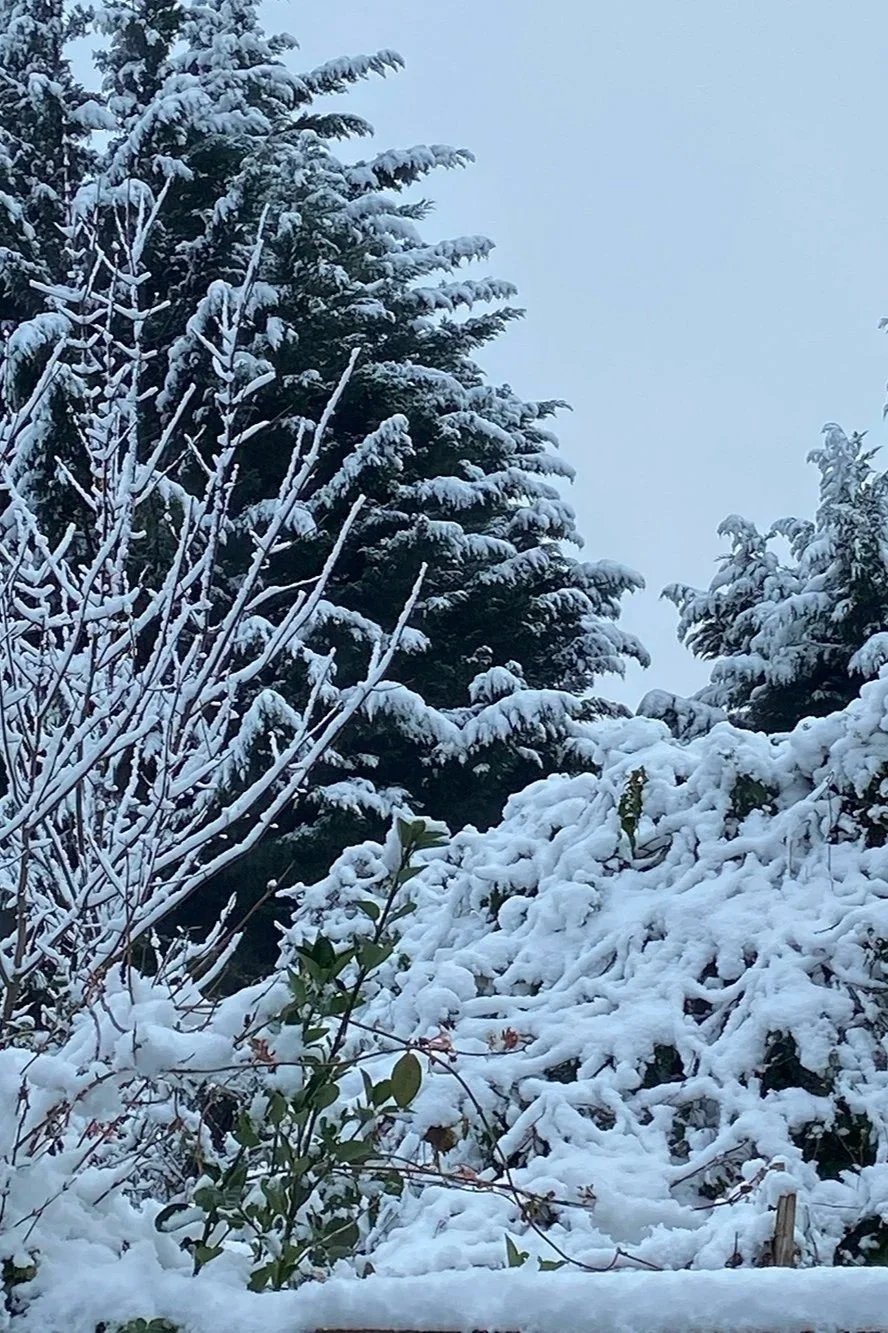
In a bit of a change from the ‘Tsuki’ kanji of the other months, ‘Shiwasu’ stands out in and of itself not just because of the unique suffix, but also because of the specificity of its meaning.
In Japan, Buddhism and Shinto are the predominant religions, and Buddhist monks in particular are referenced in Shiwasu. It comes from them being so busy with preparations that they break their normally calm and methodical demeanour and must rush from event to event performing all important rituals and ceremonies- hence, the month of running monks! December and early January are very important months in Japan, reserved not only for shrine visits and sorting out any loose ends but also for ‘susuharai‘, the mid-month deep clean of households, as well as preparing to return home to see family.
Unlike in many western regions, Christmas is not commonly a celebrated occasion in Japan- in fact, Yukari and I often say that things are reversed, as Christmas is casually celebrated with friend groups and partners, and New Years is reserved for visiting your family.
The meals are also much more casual at Christmas- believe it or not, strawberry cream cake and fried chicken (specifically the kind made by a famous colonel from Kentucky) are a common delicacy during Japanese Christmas! Conversely, New Years Day sees households spending days beforehand preparing a meticulously hand crafted ‘Osechi Ryori’* meal served in tiered lacquerware boxes, eaten layer by layer throughout the day, with a formal shrine or temple visit with family being customary to ring in the new year, too.
Whether you’re spending your December rushing around between appointments, deep cleaning your home, planning to see family or simply enjoying the twinkling lights and cosy nights, we hope you (eventually!) have a wonderful and peaceful time.
*If you have time, we wholeheartedly suggest looking at ‘Osechi ryori’, the formal food served during new years in Japan- it really is quite beautiful to look at!
Happy New Year: Akemashite Omedetou Gozaimasu! - 明けまして(Akemashite, generally ‘open’, in this case the new year) おめでとう (Omedetou ‘congratulations’) ございます (a formal politeness marker used in multiple situations- I like to describe it as the vocal equivalent of a stiff handshake instead of a high five!)
As a bit of a supplementary newsletter, and a way to cap off the end of our first year of newsletters, Kimika thought she’d talk a little bit about what traditionally happens in Japan over the new years period, and how different it is in comparison to our own in the UK.

New year’s eve is one of my favourite nights- not just because there’s an air of excitement around the countdown, but also because it means eating one of my favourite foods, soba noodles made from buckwheat. We eat soba because it symbolises letting go of the past year’s hardships and the resilience shown to tackle the upcoming year, too. Soba noodles are delicate and easily cut whilst eating- symbolising letting go of the previous year’s regrets- and buckwheat is a strong crop that perseveres in harsh conditions, symbolising resilience and strength. ‘O-soba’ also has the double meaning of ‘being close by one’s side’, too- so we tend to eat soba with loved ones to ensure continued closeness together. There’s the added bonus of it being extremely delicious, of course!
In Japan, families will often visit shrines on new year’s eve to quite literally ring in the new year as temples all across the country invite people to ring their bells 108 times in the ‘Joya no kane’ ritual. If you’re very awake, climbing to higher ground and seeing in the first sunrise of the year will also bring you good luck during your ‘hatsumode’ (first visit of the year to a shrine or temple).
Another interesting cultural symbol in Japan is your ‘hatsuyume’, or ‘first dream’, of the year. It is said that if you dream of one, or all, three of the following symbols, your year will be very lucky indeed: a hawk, an aubergine, or Mt. Fuji. Why these three seemingly random things, I hear you ask? Although there are many theories and readings, the most common one is because Mt Fuji is Japan's highest mountain, the hawk is a clever and strong bird, and the Japanese word for aubergine (茄子, ‘nasubi’) suggests achieving something great (成す, ‘nasu’). I wonder if this year will be my time to bring in good fortune with one of these auspicious symbols? I will surely update you all if that should be the case.
New year’s day brings with it the fabulous osechi ryori food to look forward to, as well as an excuse to warm up and relax with loved ones under the kotatsu- a table with a special heater attached underneath, covered with a blanket to keep in the warmth- and nibble at food throughout the day. We also make and eat ozoni soup, which contains soft mochi ricecake and regional vegetables in a clear broth, with the stretchy rice cake promoting a long life, and as a connection to the gods, who are often presented with rice cake as an offering at new year.
Conversely in the UK, the new year’s eve is certainly a good excuse to blow off some steam at a fabulous party, sharing a special moment at midnight with your partner under the stars, watching the fantastic fireworks in person in central London, or tuning into the countdown on the TV. New year’s day will bring with it perhaps a bit of a hangover or a mooch around the kitchen for the last of Christmas’s leftovers- who doesn’t love Ferrero Rocher for breakfast, after all! Perhaps this year, after reading this newsletter, you may be encouraged to dream of an aubergine or two and take a minute of stillness and calm to think about the year ahead, and reflect on the year past, too. Of course, having a little lunchtime bucks fizz and a healthy slice of panettone whilst doing so wouldn’t hurt, either…!
Well, whatever you are doing, and whomever you are celebrating with, we hope that you have a blissful and warm start to the year. We look forward to another inspiring year ahead with you all, and we can’t wait to share more little insights into various lesser known aspects of Japanese culture in 2026!